
OCR and AI for project documents: controlling the reading
OCR and AI for project documents: sort the files, test the reading and verify every critical value before reuse.
By Pablo Nastar
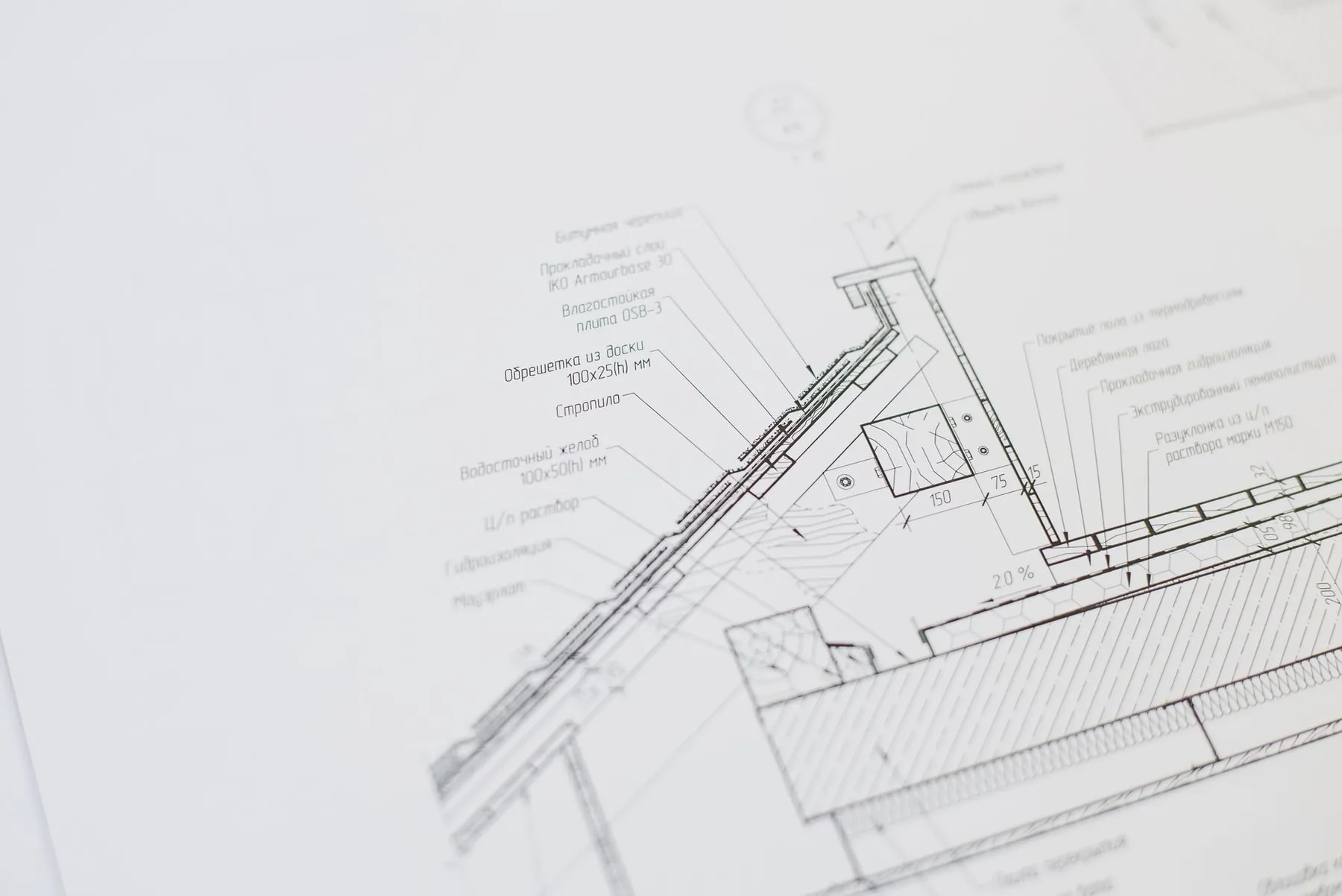
Example scenario. A plan dimension appears as "3.80" on the PDF and as "8.80" in the extracted text. The difference comes down to a few pixels, but it is enough to distort a search, a summary or a quantity table. This is the starting point for serious use of OCR and AI for project documents: the output is not a new source. It remains an interpretation to be tied back to the image, the page and the document's revision index.
OCR makes files easier to query. An AI can then classify, rephrase or cross-reference the recognised passages. Yet these two operations prove neither the accuracy of a dimension, nor the scope of an annotation, nor the validity of a document. The right method is to separate reading, extraction and decision, then strengthen the control when the information commits the project.
Contents
- Understand what OCR actually reads
- Sort the documents before any extraction
- Build a verifiable protocol
- Control the errors specific to plans and files
- Organise the roles and the evidence
- Know the limits and the counter-cases
- Frequently asked questions
Understand what OCR actually reads
OCR recognises shapes as characters; on its own it does not understand the contractual value, the geometry or the revision index of a document. A chain combining OCR and AI therefore involves at least two uncertainties: was the text correctly recognised, and then does the AI output respect that text and its context? Confusing these stages prevents you from identifying the origin of an error.
Distinguish image, recognised text and interpretation
A PDF may already contain a text layer, be only a series of images, or mix the two. The first check is simple: select a passage and compare it visually with the document. If the selection skips lines, reverses characters or merges two columns, the full-text search cannot serve as proof without going back to the page.
The NIST IR 8199 on the independent evaluation of text recognition compares algorithm output with a reference truth at the word and character level. This principle is more useful than an isolated commercial score: for your corpus, you must prepare expected answers and observe the gaps. The report does not give a rate transferable to an agency's plans; it provides a logic of evaluation.
Spot the information that is not running text
A plan concentrates objects that are hard to read: dimensions on lines, markers in bubbles, revision indices near a title block, hatching, compact legends, symbols and handwritten annotations. Even when each character looks legible, their spatial relationship carries part of the meaning. A value placed near an opening does not have the same function depending on the graphic convention and the view concerned.
The simple rule to remember: a text extraction can help find an area; it does not replace graphic reading. The Educasium guide on construction take-off from plans shows why a quantity must stay tied to an identified plan, an area and a reproducible calculation rule.
Sort the documents before any extraction
A batch that looks homogeneous may require several treatments. A digital specification, a scanned plan, a table-based schedule and a photographed report do not have the same structure or the same level of risk. Putting them in a single conversation and then asking for a "file summary" hides errors instead of reducing them.
Create a minimal record per file
Before OCR, record the file name, its origin, its date, its revision index, its number of pages and its status. Add the document type and the possible presence of personal or confidential data. This record prevents an obsolete but more legible version from being taken for the applicable version.
The France Num and CNIL guide on choosing an AI solution calls for defining a usage policy, monitoring the data introduced and checking the results: these recommendations appear in the practical sheet on generative AI solutions. For a project file, classifying the data therefore precedes the choice of tool. The Educasium guide on the confidentiality of AI tools helps decide which files may leave the work environment.
Adapt the control to the document
| Document | What OCR can ease | Main risk | Minimum control |
|---|---|---|---|
| digital specification | find a clause or a lot | truncated passage or wrong version | re-read the clause in the dated file |
| scanned plan | spot a text or a title block | dimension, symbol or area mis-linked | visually check the view and the revision |
| table schedule | pre-fill a structured extraction | merged columns or shifted row | match each row to the source page |
| photographed report | make reservations searchable | handwriting or negation misread | re-read the image and identify the author |
| assembled document | search several items | pages, revisions and authors confused | separate the items before processing |
This grid does not measure an engine's performance. It helps choose where the return to the source must be systematic and where a sample check may suffice for a task with no external effect.
Build a verifiable protocol
A useful OCR protocol lets another person find the same passage and understand why it was accepted. The deliverable is therefore not only a text file. It includes the reference of the item, the page, the area, the raw output, the correction and the name of the validator when the information is critical.
Prepare a reference corpus
Choose a few documents representative of the real difficulty: skewed scan, low contrast, dense title block, multi-column table, annotations and revision indices. For each, manually transcribe the fields to be tested. This reference truth remains limited to the corpus; it does not prove that the tool will be reliable on a new format.
Step 1: inventory before converting. Assign a stable identifier to each item and note its revision. Discard duplicates and versions whose status is not established.
Step 2: prepare without altering the source. Work on a copy. A rotation, a crop or a contrast adjustment can improve recognition, but the original file must remain available for comparison.
Step 3: keep the raw OCR output. Do not let the AI "correct" the characters silently on the first pass. The raw output helps distinguish a recognition error from a later rephrasing.
Step 4: tie each field to an area. An extracted value must refer to the page and, if possible, to a visual excerpt. An answer that cites only the overall name of the PDF is insufficient for a dimension or a committing requirement.
Step 5: test the known failures. Check negations, decimals, units, similar characters, empty cells and column breaks. Add to the test set any error found during use.
Step 6: close the validation loop. The competent professional accepts, corrects or refuses the value. The correction is kept with its reason in order to improve the protocol, not to make it look as if the engine was right.
Separate search and decision
A search within a file can tolerate a false negative if it is used to guide reading and the user then opens the items. A table sent to a client, a requirements summary or a take-off require a higher level of proof. Ask yourself: if this field is wrong, who sees it before it changes a cost, a deadline or a compliance point?
Control the errors specific to plans and files
The dangerous errors are not always the most visible. An illegible paragraph triggers an alert immediately. A plausible dimension, a missing unit or a replaced revision index may, on the contrary, travel all the way to the deliverable because they look like normal information.
Control the high-consequence fields
Before processing, mark the categories that require a return to the image: dimensions, quantities, dates, regulatory references, amounts, lot numbers, revision indices, reservations and negative wording. The AI can flag these fields, but the final control belongs to the business. Missing information stays "not found"; it must not be completed by plausibility.
For tables, also compare the structure. A cell correctly recognised but tied to the wrong row is a meaning error. For plans, check the area and the view: graphic proximity is not a guaranteed relationship after conversion into linear text.
Test the search, not only the transcription
The protocol must include questions whose answer is present, absent and ambiguous. If all the test questions have an obvious answer, you are not evaluating the ability to stop. A useful system must be able to return "not determinable from the items provided" and indicate what is missing.
We have not yet deployed or measured at an Educasium client an OCR chain dedicated to plans that would allow a result to be announced. This text defends a test method based on public sources and on the observable characteristics of the documents. It proves neither a recognition rate, nor time saved, nor the suitability of a particular tool. Before any real use, the team must build its corpus, define its critical fields and measure the errors in its own environment. This absence of verified client feedback forbids turning the proposed protocol into a case study or a commercial promise.
Organise the roles and the evidence
The same colleague should not prepare the test, correct the output and authorise a committing deliverable alone. Separating the roles reduces the risk of accepting an expected error or confusing familiarity with accuracy. It can stay light in a small structure, but it must be explicit.
Assign four responsibilities
- The corpus owner confirms the version and the usage rights of the files.
- The operator runs the OCR and keeps the settings useful for reproduction.
- The business controller compares the critical fields with the image and with the project convention.
- The validator decides whether the output may feed a deliverable, taking its destination into account.
One person may hold several roles, but the record must show when they change responsibility. The prompt engineering training can improve the instructions given to an AI; it does not correct a poor OCR reading or a misidentified document version.
Define the evidence to keep
Keep only what is necessary: file reference, revision, test date, engine version, evaluated sample, observed errors, corrections and decision. The retention must stay compatible with the project's data policy. Archiving all documents and all conversations without limit would create a new risk in the name of control.
Know the limits and the counter-cases
OCR and AI are not the right choice when the geometry carries most of the meaning, when the source is too degraded or when no professional can validate the output. In these situations, a targeted manual entry, a new scan or a manual reading may be more defensible than an automation that is hard to explain.
Cases where processing must be suspended
Stop if the document's revision is uncertain, if the pages have been reassembled without traceability, if the data cannot be sent to the chosen service, or if the engine returns no reference back to the source. Also suspend the use when the control costs as much as direct reading without producing an observable benefit.
OCR does not turn an incomplete file into a complete one. AI does not infer an applicable requirement from an undated plan. And training does not transfer professional responsibility to the tool: it teaches how to frame, check and refuse an output.
Frequently asked questions
Is a good OCR score enough to use a project document?
No. A global score can hide an error on the one dimension, date or negation that commits the deliverable. You must evaluate the critical fields on a representative corpus and go back to the source image. The score helps compare trials; it does not replace business validation.
Should you correct the PDF before running OCR?
A copy can be straightened, cropped or enhanced to ease reading. Always keep the original and record the transformation, because image processing can also erase a line or alter a useful contrast. Test the same page before and after preparation. Keep the version that improves the expected fields, not the one that only looks cleaner.
Can you ask an AI to correct OCR errors automatically?
It can propose a correction from the context, but that proposal adds a second interpretation. Keep the raw OCR text and flag the suggested correction separately. For a committing value, compare the proposal with the image and have it validated. A plausible correction with no evidence must not enter the deliverable.
How do you train a team without using client documents?
Prepare a synthetic or public corpus that reproduces the visual difficulties of the trade without exposing data. Deliberately add known ambiguities and a reference truth. Participants must find the area, explain the gap and decide when to stop the flow. The assessment is about that reasoning, not the number of pages processed.
Move from a searchable scan to a controlled reading
The simple rule to remember: keep the source image, tie each value to its area and strengthen the control according to its consequence. A useful OCR chain does not hide its uncertainty; it lets the professional locate it and decide.
The AI training for architectural management can integrate this protocol into exercises suited to your team's documents. Training eligible for OPCO/FIF PL funding under conditions. Qualiopi-certified organisation. Eligibility is not an automatic agreement: the funder decides according to your status, its criteria, the file and the available budgets. To frame the programme, contact Educasium.